Identity
Is the submitted material consistent with the peptide declared on the sample?

Documented sample intake, qualified partner-laboratory analysis and secure report delivery for Canadian businesses and researchers.
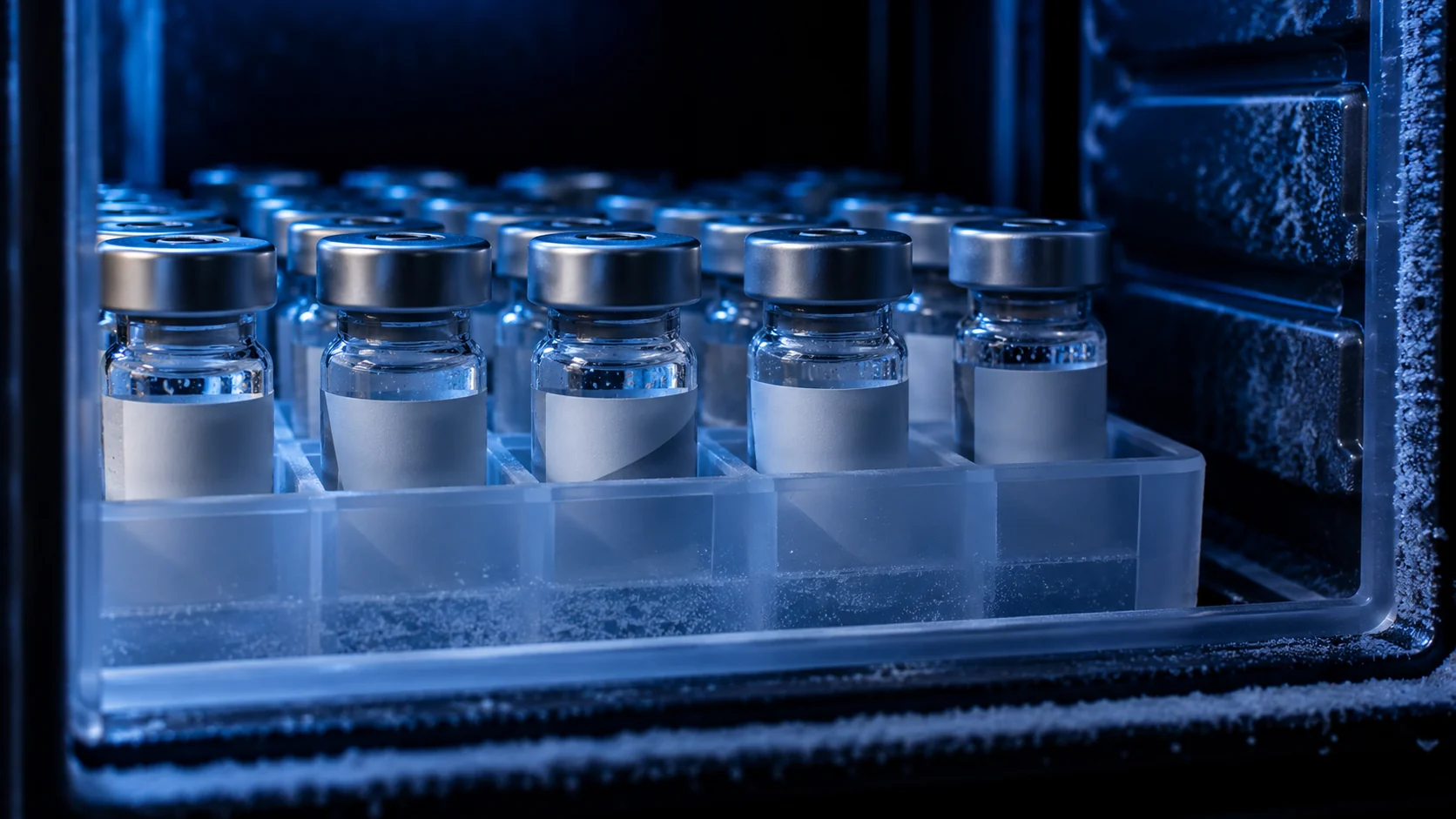
Select the measurements that match what you need to learn. Final availability, method fit and sample quantity will be confirmed before any shipment is accepted.
Is the submitted material consistent with the peptide declared on the sample?
What proportion of the measured chromatographic signal is attributed to the main component?
How much peptide content or concentration is measured against a suitable calibration?
What bacterial endotoxin level is detected under the agreed method and reporting threshold?
What levels are reported for lead, arsenic, cadmium and mercury within the defined panel?
Can the submitted sample be screened for fentanyl and the specific analogs included in the partner laboratory’s method?
Can supported components in one multi-peptide sample be separated, identified, assessed for purity and measured on one consolidated report?
Can an undisclosed sample be compared with the partner laboratory’s supported analytical library when the expected identity is unknown?
Can bacteriostatic water or another submitted solvent be assessed under a defined pH, preservative or composition method?
Specific analytes, methods, sample quantities, fees, and timelines will be published after a laboratory partnership and controlled pilot are established.
Every stage should be traceable: what arrived, when it moved, what was measured and what the issuing laboratory reported.

Tell us the declared material, lot or batch number, the questions you need answered and the business or personal name requested for the report.
We confirm acceptance, assign a submission ID and provide the correct receiving address before anything is shipped.
Secure every glass vial in a closed, lightweight plastic vial case. Small two-slot cases or larger multi-vial cases are suitable if each vial fits securely and the lid closes. Do not mail loose glass vials.
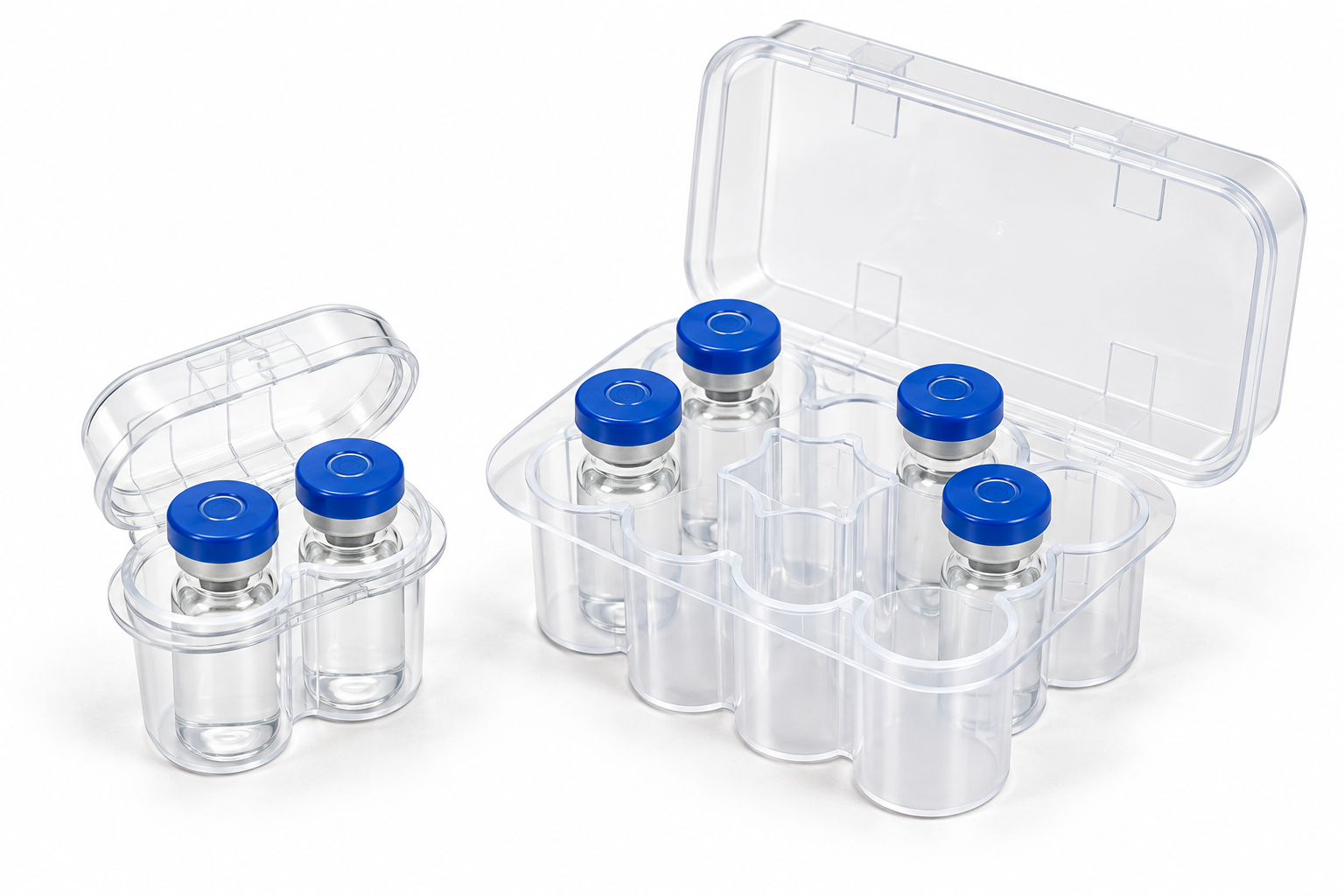
Place the closed case in a padded envelope and use tracked Canada Post service. Keep the tracking number and share it with us so the shipment can be matched to its record.
We confirm receipt by email, photograph the vial as received and match its identifying information to the secure sample record. The confirmation includes the planned laboratory-transfer date.
The laboratory assesses method fit, measures the accepted sample against appropriate references and controls, and performs its technical review under its own procedures.
After laboratory review, VialSure preserves the original signed report in your private archive and sends an email notification. Laboratory identifiers, QR codes and verification links remain unchanged.
The final method and reporting format are set with our laboratory partner for each accepted sample. These descriptions explain the questions behind the proposed testing menu.
Compares the submitted material with the declared target using a suitable analytical method and reference information.
A match supports an identity conclusion within that method’s limits. One measurement alone may not establish a complete molecular structure.Reports the proportion of the measured signal attributed to the main component under a stated separation method.
Chromatographic purity depends on the method and detector. It is not a claim that every possible impurity has been excluded.Estimates the measured peptide content or concentration against a suitable calibration and accounts for sample preparation.
Amount and purity answer different questions; a high purity result does not establish the quantity in the vial.A defined add-on checks for bacterial endotoxin under the agreed method and reporting threshold.
An endotoxin finding is not a sterility test and does not establish that a material is suitable for injection.A defined heavy metals panel reports the elements included in the ordered scope and the applicable detection limits.
A result covers the named elements, method and submitted sample; it is not a universal contaminant screen.An optional targeted screen checks the submitted sample for fentanyl and the analogs included in the partner laboratory’s method, with the result reported against that method’s stated detection limit.
“Not detected” applies only to the listed targets in the submitted sample. It is not a general contaminant screen, sterility test, safety certification or approval for use.This directory identifies common research materials that VialSure may submit to a prospective partner laboratory for feasibility review. A listing is not confirmation that a sample, matrix, blend or requested measurement can be accepted.
Every request is reviewed for material identity, sample format, blend composition, requested tests, required quantity, method fit and legal acceptance. A quote, inquiry or directory listing is not authorization to ship.
A blend is submitted and quoted as one sample—not as a separate paid test for every component. Within that analysis, the laboratory reviews whether the individual components can be separated, identified and measured reliably.
VialSure preserves the issuing laboratory’s original report. Exact fields depend on the accepted method and the laboratory’s reporting format.
Create a verified email account to review linked sample records and download the original signed reports supplied by our laboratory partner. Password recovery and private access are already available.
Public report lookup will be added only after the laboratory partner approves the process and customer privacy controls.
We want a reader to understand what was received, what was tested, and what the result means. The exact COA layout and supporting data will be agreed with our laboratory partner.
When a laboratory supplies a QR code, access code or public report link, it should resolve to the laboratory’s own website and record. VialSure preserves that original verification path so businesses can share a COA without asking customers to trust a seller-hosted copy.
Submission ID, receipt date, declared material, label and lot details, plus an intake photo where permitted, connect the result to the vial we received.
The report names each requested test, the method used and which measurements were completed. A test not ordered or performed should not be inferred from the report.
Measured values, units, stated thresholds where applicable, the issuing laboratory and its technical review make the conclusion interpretable.
Method notes, chromatograms, calibration or other supporting information may accompany the COA if the laboratory can provide them under the agreed service.
A report applies to the submitted sample and the specific methods performed. It does not certify all vials in a batch, product authenticity, safety, efficacy, sterility, regulatory approval, or suitability for human or veterinary use. Testing does not authorize sale, administration or clinical use.
Clear testing starts with knowing what each measurement can—and cannot—answer.
Identity asks what the main material is. Purity describes a measured signal. Amount estimates how much peptide is present. One result should not be substituted for another.
An endotoxin assay answers a defined analytical question. It does not show that a sample is sterile or suitable for administration.
Confirm the sample identifiers, methods, units, dates, issuing laboratory and limitations before interpreting any conclusion.
A QR code or access code may confirm that a laboratory issued a specific report. It does not broaden the tests performed or the report’s scope.
A rigid vial case, padded envelope and tracking number reduce breakage risk and help preserve the connection between shipment and sample record.
Method fit, unusual findings, insufficient material or a quality-control concern can require repeat preparation or confirmatory analysis.
A targeted screen reports whether the named fentanyl targets were detected above the laboratory’s stated limit. The method, analyte list and limit should always appear on the COA.
A blend report should identify which components were resolved, what was measured for each one, and where co-elution, standards or matrix effects limit the conclusion.
A blind identity result depends on the laboratory’s supported library, reference standards and method. It should not be presented as an unlimited search for every possible compound.
Request a short sample-planning call with VialSure before shipping anything.
No. VialSure is in prelaunch. Please wait for written acceptance, a submission ID and the receiving address before sending anything.
The final timeline will be stated when an order is accepted. We plan to confirm receipt and the intended laboratory transfer date by email. Shipping time and any method development or retest would be explained separately.
Tell us whether you prefer a business or personal name. We will request it from the issuing laboratory, subject to its reporting and legal requirements.
We plan to document the vial at intake and provide the photo with the report or on the COA where approved. The available analytical attachments depend on the laboratory’s reporting package.
No. Endotoxin analysis answers a defined analytical question. It does not measure sterility or establish safety or suitability for administration.
We will review the request before accepting a shipment and explain whether our laboratory partner can perform the analysis. You can ask about a proposed sample during prelaunch.
They are included in our directory for feasibility review, but a listing is not acceptance. The partner laboratory must confirm the material, matrix, method, standards, sample quantity and requested measurements in writing before shipping.
Blends are submitted as one testing request and quoted as one service—not as a separate paid test for every component. The laboratory confirms which components can be clearly identified and measured within its blend method before the sample is accepted.
We are requesting a multi-component blend service from our laboratory partners. If accepted, the report would identify the supported components, purity and measured amount that the agreed method can resolve on one consolidated report.
We are exploring a blind identity option. It would depend on the partner laboratory’s analytical library, available standards, sample quantity and acceptance criteria. It would not be an unlimited identification search.
Local drop-off may be offered at the VialSure receiving location once operating hours, intake controls and laboratory-transfer arrangements are finalized. Written acceptance and a submission ID will still be required before delivery.
Sample quantity and price depend on the accepted tests, matrix, number of components, reference standards and whether method development or repeat preparation is required. VialSure will provide the confirmed requirements before accepting a shipment.
Possibly, but this cannot be promised in advance. It depends on the available quantity, preparation requirements, laboratory workflow and whether enough material must be retained for repeat or confirmatory work.
Use the verified email address connected to your order to sign in to the secure client archive. Linked sample records and original signed laboratory reports will remain available there for later review and download.
It is planned only after the issuing laboratory approves the process and VialSure has suitable privacy controls. Any original laboratory QR code, access code or verification link will remain unchanged on the archived report.
We welcome inquiries from Canadian research suppliers, businesses with recurring lot testing needs, and laboratories interested in a documented customer intake program. For support, call 519-694-6095 or email support@vialsureanalytics.ca.
The preferred delivery model is agreed with each laboratory partner. Access, file handling, retention, and notification rules are documented before customer testing begins.
London, Ontario
VialSure Analytics is operated by North Vial Research Inc., an Ontario corporation. No testing or sample intake is currently offered through this site.